 Class: 6 Date:
Subject: English
The theme of the lesson: Healthy food
Aims: to generalize and to systematize pupils’ knowledge according to theme "Healthy food";
to develop pupils’ skills in reading, listening , speaking;
Objectives: to develop pupils’ interest to the subject. to teach pupils eat healthy food;
Type of the lesson: combine lesson
Language: recycle vocabulary and structures seen previously;
extra: occasional treat, calcium, avoid, whole grains
Literature: Family and Friends 5
Materials: interactive board, class book, work book.
The course of lesson:
I.Organization moment:
Teacher: Good morning, dear children & dear guests! I’m glad to see you!
Children: Good morning, teacher!
Teacher: How are you?
Children: We are fine, thank you. And you?
Teacher: I’m fine too. Take your seats.
Teacher: What is the weather like today?
Children: … (It’s cold, warm, sunny, snowy, windy)
Teacher: What date is it today?
Children: Today is the 8th of February.
Teacher: What day of the week is it today?
Children: It’s Saturday today.
Teacher: Children, tell me please, who is absent today?
Children: … (…is absent, all are present)
II.Warm up:
Teacher: Now children, let’s listen a song “Start eating healthily”! presentation of slide 2
For first time listen, then we’ll sing all together!
“Start eating healthily!”
1.Eats lots of vegetables.
Fill up your plate.
If you eat healthily,
You will feel great.
Chorus
Food gives you energy
2.Fruit is delicious, so
Juicy and sweet.
It’s full of vitamins
And good to eat
.
Start eating healthily.
Try it today!
For work and play.
VI.Presentation:
Teacher: Our theme for today’s lesson is "Healthy food". Presentation of 1,3,4 slides
This is the plan for today’s lesson:
• We’ll listen and read the text
• We’ll learn new words;
• We’ll talk about “Healthy food”;
• We’ll practise how to order a meal at restaurants;
And now let’s start our lesson.
Teacher: Children remember, what kind of proverbs or tongue twisters did you learn from your previous lessons about health?
1) A sound mind in a sound body. В здоровом теле здоровый дух. Тәні саудың жаны сау.
2)"Fresh fried fish, fish fresh fried, fried fish fresh, fish fried fresh."
3) A box of biscuits a box of mixed biscuits & and a biscuit mixer.
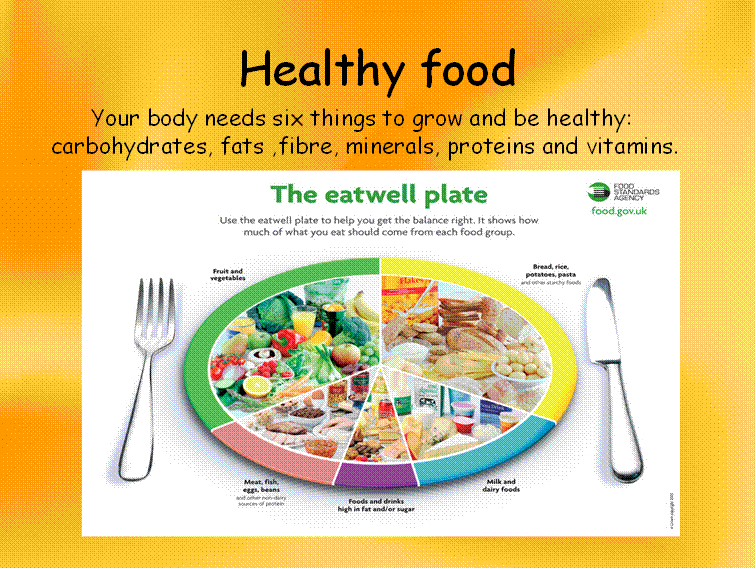
Teacher: Children, open your class book at p 76. Ex 1 Look at the poster. Presentation of slide 5-7
Which foods should we eat most of? Share your ideas please.
Children: we should eat cheese, yougurt and drink milk; bread, cereal, pasta and rice;
Meat, fish, eggs, beans and nuts; fruit and vegetables;
Teacher: Why we shouldn’t eat mostly cake or chocolate? (They contain too much sugar)
Teacher: Children we are going to listen to the text now. Ex 2 p 76, Let’s listen and read the text.
Please, listen attentively.
Ok, children please read the poster sentence by sentence.
That’s all. Thank you.
Children find out the new words. occasional treat – есть время от времени, avoid –избегать,
calcium-кальций, whole grains-цельные зерна
Teacher: checking comprehension.
What do dairy products contain? (milk, cheese, yougurt)
What foods should be occasional treats? (sugar & salt)
What are the most important parts of a healthy diet? (whole grains)
Which foods should we avoid? (salted and sweet food)
Which foods are low in calories and full of vitamins? (fruit and vegetables)
Teacher: Ex 3 p 76 read again and write the answers. Read the sentences silently. Look at the example, you must write short answers. Do the exercise individually.
1. Is it important to eat fruit and vegetables? Yes, it is.
2. Is fruit full of calories? No, it isn’t.
3. Are whole grains good for your heart? Yes, they are.
4. Is meat bad for you? No, it isn’t.
5. Is cheese good for your bones? Yes, it is.
6. Can you still eat sweets sometimes? Yes, we can.
Teacher: Dear children we are going to do exercise from additional material.
Exercise from additional material “Words in context” Listen and match.
You must listen attentively definitions of these words and match.
Now, if you ready, let’s start.
1) If food of this it taste of sugar (sweet)
2) Food that we eat between meals (snack)
3) The types of food that we eat most often (diet)
4) The power that your body get for food (energy)
5) If food of this it taste of salt (salty)
6) An amount of energy (calorie)
7) Things in food that we need to correct & be healthy (vitamins)
8) The place where you get something from (source)
Children look at the key vocabulary and make a dialogue, please work in pairs. Presentation of slide 8
Key vocabulary of ordering a meal
Can I see a menu?
here you are
Enjoy your meal!
Would you like ...
Can I get you anything else?
I'd like the check (bill - UK English), please.
That'll be $6.75.
Have a good day!
Please, make your own dialogues. Who wants to start? That’s all you are cleverest boys and girls!
Children look at the pictures and tell me which of them healthy & unhealthy food? Presentation of slides 9-10
Use Venn diagram below, compare healthy & unhealthy food, same.
healthy food unhealthy food
cheese, fast food
milk, fruits butter, alcohol drinks
vegetables salt, sugar tinned food
natural juice oil sweets
same
Do you want to be a healthy person? (Yes, we want to be healthy.)
DON’T FORGET presentation of slide 11
Too little foot makes you thin.*
Too much food makes you fat.*
The wrong food makes you ill.*
The right food makes you well.*
Too many sweets are bad for you especially for your teeth.*
Reflection: 1.Synthesis of a new material.
Teacher: What did you like/dislike on the lesson?” Every child shall give its opinion on any of these issues.
What is new you have learned today?
2. Explain and write homework. Work book p 66
3. Summing up the lesson.
Evaluation: Dear children! You work hard today: You spoke English, wrote, read and did different tasks and you have good results! The lesson is over. Goodbye!
-----------------------------------------------------------------------------------------------------------------------------------
*TOPIC: Around the World.
Grammar puzzles.
THE
MOTTO:” Sunny Thoughts Make the Whole Day Brighter”.
The world is a book, and those who do not travel, read only a page.
Objectives: to improve speaking,
reading, listening skills;
to revise the Past Simple and the Present Perfect Tenses;
to develop skills of working
in pairs and groups;
to broaden outlook.
Equipment: a workbook,
presentation, handouts, pupils’ projects
Тема: Навколо світу. Граматичні
пазли.
М
ета: Повторити і закріпити лексико-граматичний
матеріал та особливості вживання минулого неозначеного та теперішнього
доконаного часів в усному
та писемному мовленні.
Удосконалювати техніку
читання та
навички аудіювання.
Виховувати уміння
працювати в колективі.
Обладнання:
зошит, картки для роботи (НО),презентація,проекти учнів
PROCEDURE
I. INTRODUCTION
T: Good morning
everybody! Students, please greet our guests. Glad to see all of you in good
health and mood! Today we have the unusual lesson. Our teacher T.M will help us
with Computer Presentation. Don’t be afraid,
don’t be silent. Speak and express your
opinion. OK, look at each other, please.
Smile! Look at me. Smile!
Warm-up activities.
T: To my mind this is the day that the Lord has made.We’ll rejoice and be glad in it. And the best way is to
start our lesson with a prayer:
My Angel, my heavenly
Angel,
My guardian, day by day
Lead me to a good life,
For I choose this way.
Guard me from all evil,
Keep me well and good,
Help me to be kind to all
And do
the things I should.
T: Thanks a lot! Now
look at the blackboard and let’s try to guess the topic of our lesson.
Each student gets the card with the riddle and the number (1-11). Their
task is to guess the word and to write the first letter of it on the blackboard
in the square marked by the number the student has in his/her card.
A1
|
R2
|
O3
|
U4
|
N5
|
D6
|
W7
|
O8
|
R9
|
L10
|
D11
|
(Students guess the riddles, go to the blackboard and
write the letters as far as they know the answer. If there are difficulties,
the class helps. 4 min)
The riddles
1 This fruit grows on an apple-tree. (Apple)
2. It is a very beautiful flower, a
flower of love, but with thorns. (Rose)
3. It lives in the ocean, eats
crabs, has got 8 legs. (Octopus)
4. What goes up when rain comes
down? (Umbrella)
5. 1,2,3,4,5… They are … (Numbers)
6. It has got 4 legs, likes to jump
and wags his tail, doesn’t like cats.(Dog)
7. You can keep it after giving it
away to someone else.(Word)
8. What is the only vegetable that makes you cry?(Onion)
9. What comes down but never goes
up? (Rain)
10.What building has the most stories?(Library)
11.An apple a day keeps the…away.(Doctor)
Now you know the topic we are going to speak about. It is Around the
World.
T: Today we’ll revise the Past Simple and the Present Perfect Tenses.
We’ll also practice grammar in the dialogues and exercises. And I hope after
the lesson you will be full of impressions and know more about this wonderful
world.
Questions (T-Ps )
Do you like
geography lessons? Do you know much about different countries and places in the
world? Would you like to check your knowledge of geography and answer the
questions of the quiz?
II. Main part of the lesson
1.Geography Quiz «What Do You Know about Our World?»(кидаю м’яча)
1. Which is the longest river in the
world? (Nile in Africa)
2. What is in common with Kyiv, Ottawa and London? (They are the capitals of
the countries).
3. Black, Red, White, Yellow — (not “colour”)
but …(Sea)
4. Is there a capital of Europe?( no capital)
5.
Where does koala live? (Australia)
6.
Which is the largest island in
Europe?(Great Britain).
7. What is the capital of the U S A ? (Washington)
8. Where is the Eiffel Tower? (Paris)
9. Where are the Pyramids? (Egypt)
10. Where is the Coliseum? (Rome)
11. Where is Big Ben? (London)
12. Where is the Kremlin? (Moscow)
13. What is the highest mountain in the world? (Everest)
14. Where is the Disneyland? ( California, the USA)
15. What continent is the coldest? (Antarctica)
T: My
best congratulations!
Now you have to put these geographical names in
the right column.(На дошці)
2.Put these geographical names in the right column:
Cities Rivers Oceans Continents
London, Europe, the Bystrytsia, Madrid, the Pacific,
Africa, the Thames, the Dnipro, Rome, the Nile, Asia, the Atlantic, New York,
America, the Indian.
3. Homework
T:I know that some of you have prepared very interesting projects about
the countries you’ve visited or would like
to visit. Tell us about them, please.(5-6 pupils)На карту світу кнопки кольорові.
4. Listening
Dear children let’s listen to and watch the
song "One Small World".
One
Small World
Sam lives in New York.
He works on the banks of the
Hudson river.
Jean Paul lives in Paris
In a flat near the Eiffel
Tower.
Yem lives in Cambodia
In the capital city Phnom
Penh.
Sarah lives in London
She likes to listen to the
chimes of Big Ben.
So many cities in one small
world.
People live in South America,
in Bogota,
People live in Australia, in
Canberra,
In Europe and Asia and Africa,
Rome, Beijing and Nairobi,
Paris, Calcutta and Tripoli.
Natasha lives in Moscow,
She walks past the Kremlin in
the winter snow.
Haji lives in Cairo
The home of the Sphinx, the
land of the Pharaohs.
Now in 2 groups ( Travelers
and Dreamers) as you ‘re sitting match
the names with the city where the children live; you’ll get 1 point for each
correct answer.(1-6 на дошку)
Match them up.
|
|
Sam
|
Phnom Penh
|
Jean Paul
|
London
|
Yem
|
New York
|
Sarah
|
Paris
|
Natasha
|
Cairo
|
Haji
|
Moscow
|
Pre-listening
activity
Well done. But do you know that every country has got its own traditions
and the rules of behavior? Let’s listen about some of them. First we move to
China.
While-listening activity
CHINA
When in China, don’t kiss anyone in public – it’s very
rude. Never be late for appointments, and don’t tell jokes to people you don’t
know very well. Be careful when you are eating, too – never leave your
chopsticks pointing upwards in your rice because this makes people very upset.
A last tip – when you give someone a present, give it with both hands.
Post-listening activity
Now everyone choose the
correct answer. Exchange your papers, put your marks 1-5.You can see compass
next to your place, if your answer is correct paint 1 part of the task.1 correct answer 1
part of the compass.
Сhoose and write.(1 )
1. When in China, it’s very
……………. to kiss anyone in public.
A rude B clever C
polite
2. Never be late for
……………………… in China.
A concerts B appointments C school
3. In China don’t tell ………….
to unknown people.
A songs B poems C jokes
4. Never leave your ………………..
pointing upwards in your rice.
A chopsticks B spoons C forks
5. You should give your
present with both……….
A arms B hands C fingers
The second place is England.(читаю)
ENGLAND
When in
England always say “please” and “thank you”. Never push into
a queue of people or they’ll get angry. Don’t be late for appointments and
don’t talk with your mouth full. Remember – always ask before smoking in
someone’s house.( кожен окремо на компасі)
Post-listening activity(в робочому зошиті,на
компас результат)
Choose the words from the list to fill in the gaps.(2)
to push into, to ask before, to say, to talk with, to
be late for
1. ……………….. “please”
and “thank you”
2. ……………….. a queue of
people
3. ………………..
appointments
4. ……………….. your mouth
full
5. ……………….. smoking in
a house.
5.Communication
Practice.
Т:Now let’s play the game ’’What country have you
been to?’’
1 group:Tell about the country
you have been to or want to visit it one day using Past Simple Tense. 2 group
-You’ll try to guess it using Present
Perfect Tense in your answers.1 point for each correct answer.
-I enjoyed 5
o’clock tea with cookies, saw 221 Baker Street, took a photo near Big Ben.
-You have been to London.
-I saw the skyscrapers, had
dinner in McDonalds and went to see the Statue of Liberty.
-You have been to the USA.
-I went to see the Pyramids,
rode the camel and ate a lot of bananas.
-You have been to Egypt.
-I heard Justin Bieber’s songs in his country, met a lot of immigrants
from Ukraine, saw the ice hockey game, people spoke English and French there.
-You have been to Canada.
-I ate paella, watched Barselona’s football match.
-You’ve been to Spain..(на дошці результат )
Our next stop is Madagascar. Let’s
read some information about it and do the true/false task after that.
2. It is not far from Africa. T
3. Madagascar is a very green island. T
4. You can’t see lemurs here. F
5. The symbol of the island is a crocodile. F
6.
The flag of Madagascar is white and green. F
Mr. Grey was a
teacher at school in a big city in England.
He usually went to France or Italy during the summer holidays and he
spoke French and Italian very well. But
one year he decided to go to Spain but he
didn’t speak Spanish. So he went to the evening courses to learn Spanish. Mr. Grey studied very hard and
in summer he went to Spain. When he returned home, his friend asked: «Did you
have any troubles with your Spanish?» Mr. Grey answered, «No, I didn’t but the
Spanish had».
7.Speaking. (мікрофон)
- Do you agree that if you don’t know the language of the country as
this English teacher, you’ll still have a pleasant time there?
-No, I disagree, if I don’t know the language, I can’t communicate with
people.
-Yes, I think so. I can travel with a Google translator.
-I think Google can’t help you if you can’t read that language.
-You’re helpless.
8 Relaxing.
I think you are tired. Listen to music and
listen to me. Sit comfortably. Close your eyes. Breath in. Breath out. Let’s imagine spring.
You are sitting on the green grass. The weather is fine. The light wind is
blowing. The birds are singing. The World is full of wonders. You are quite. Your brain relaxes. There is
calm in your body. You are relaxing. You love your relatives, your friends. You
can do anything. You have much energy. You are in good spirits. Open your
eyes.
9.Writing.
Put the verbs in brackets in
the correct tense:
the Past Simple or the Present Perfect. Ex.2,p.63
(3)
1
…you …(to phone) him yet? -Yes, I…. I... (to phone) him some minutes ago.
2 … she…(to be) at the shop today? - Yes, she…. She … (to be) there an hour ago.
3. They…(to read) this text already. They…(to read) it a year ago.
4… your friend
ever… (to see) the performance? -Yes, he…
5.He …(to see) it
some days ago.
Make up
sentences with the words: (4)
1.You/just/phone/your friend.
2. He/play/basketball/yesterday.
3.We/write /a project/ last
week.
4. I /see/this picture/ already.
5. They/not
speak/to me/yet.
III. SUMMING-UP
-Did you
like our today’s lesson?
I believe that one day
you can say: I’ve read lots of pages in the World’s book, visited my dream
country and have a good time there, because sunny thoughts make the whole day
brighter.
Використання інтерактивної вправи «Сенкан».
Now we’ll sum up our lesson in a form which is called “cinquain”. Let’s
remind the rules of such a form.
Structure of “cinquain”
1 line: Theme (the main word)
2 line: two adjectives
3 line: three verbs (actions of the main word)
4 line: a sentence (quotation on the topic)
5 line: synonym / antonym of the main word.
T. Our main word is “World”.
-The winner is…team1-2
Home assignment:
Thanks a lot to everybody for your stories, projects. A really good job. No doubt. For the next lesson you should make up your own crossword.
--------------------------------------------------------------------------------------------------------
 Роздатковий матеріал з граматики
3 клас
Урок 14
Тема: Моя родина.
Мета: Повторити й активізувати ЛО теми.
Навчати учнів розповідати
про свою родину.
Відпрацювати конструкцію Her/his name is…
Вдосконалювати навички читання.
Формувати навички усного мовлення.
Виховувати доброзичливе
ставлення до рідних та близьких
людей.
Використовуються: роздатковий матеріал, зошит, підручник.
Хід уроку.
І. Підготовка до сприйняття іншомовного мовлення.
1. Привітання і повідомлення теми та мети уроку.
2.Перевірка домашнього завдання. Учні
показують підготовлені вдома картинки «Родинне дерево».
3. Уведення в іншомовну атмосферу.
Гра «Склади слова».
(Робота з роздатковим матеріалом). (Наочний мат. 1)
ІІ. Основна частина уроку.
1.Повторення лексичного матеріалу з теми «Родина»за слайдами презентації.
2. Письмо.
Робота з роздатковим матеріалом.
Записати подані слова біля відповідних малюнків. (Наочний мат. 2)
3.Фізкульхвилинка .
4. Аудіювання.
1.Етап підготовки до аудіювання.
Розглянути картинки презентації, вказати хто на картинках.
2.Етап аудіювання.
Учні переглядають відео.
3.Етап перевірки аудіювання.
Учні пригадують і відтворюють почуте.
5. Читання. 2. Подання
тексту для читання, впр. З (с. 32).
1) Етап підготовки до читання.
Усна бесіда з учнями за малюнком
до тексту.
Т: Do you remember the
Browns' family? We met them in lessons 2—3 (тема «Introduction»).
Who is the father
of the family? Who is the mother of the family?
Mr and Mrs Brown
are parents. They have children. How many children have they got? How many
sons? How many daughters? What are the sons' names? What's the daughter's name?
Mrs
Brown has parents — father
and mother. They are Bill, Tom and Kate's grandparents — Grandma and Grandpa. We can see their family
on page 32. Point to Grandma
and Grandpa. How many children have they got? What are their names? We have
spoken about Nancy
Tim and Eddy are
brothers. Brothers — брати, sisters — сестри'. А як ми скажемо двоюрідні брати й сестри? Cousins.
Who are Tim and
Eddy's cousins? Who are Kate, Bill and Tom's cousins? And who is Polly for
Kate, Bill and Tom? She is their aunt. Aunt — тітонька. Polly is Kate's
aunt, Polly is Bill's aunt and Polly is Tom's aunt. Who is Tim and Eddy's aunt?
і Who is Mike for Kate, Bill and Tom? He is their
uncle. Uncle — дядечка.
Mike is Kate's uncle, Mike is Bill's uncle and Mike is Tom's uncle. Who
is Tim and Eddy's
uncle? '
uncle? '
2) Етап читання.
T: Read the text and
tell which words referring to topic «Family» we can see in the text. How many
times can we see these words: parents; mother; father; grandmother;
grandfather; son; daughter; uncle; aunt; brother; sister; cousin?
Учні ланцюжком вголос читають текст.
3) Етап перевірки розуміння змісту тексту.
Впр. 4 (с. 32). Учні усно по
черзі читають запитання вправи і відповідають на них.
ІІІ. Заключна частина уроку.
1.Домашнє завдання. Вправа 4 ст.32.(письмово)
2. Підведення підсумків.
=============================================================
Unit 4. We Are Different
УРОК 37
Підтема: Зима.
Зимовий одяг.
Мета: Ознайомити учнів із лексикою теми. Удосконалювати
навички
читання
та перекладу.Формувати вірну артикуляцію звуків та буквосполучень.Повторити та
активізувати на практиці завдання з кольорами та одягом.
Навчати діалогічного мовлення за темою.Відпрацювати
запитання «What is he wearing оn?»Виховувати
зацікавленість до різних видів спорту та професій.
Обладнання:
Підручник,
тематичні малюнки (с. 81—83), картки для групової роботи (НО1), картки для самостійної роботи (НО2, Н03,
НО4), кольорові олівці,словники магнітофон,дошка.
ХІД УРОКУ
І. ПІДГОТОВКА ДО СПРИЙНЯТТЯ ІНШОМОВНОГО
МОВЛЕННЯ
Greeting and 1.
Привітання й повідомлення теми та мети уроку.
Aim Т: Сьогодні ми
познайомимося з назвами предметів зимового одягу.
Ви також навчитеся описувати, у що вдягнення
людина.
Warming up 2. Уведення
в іншомовну атмосферу.
Біля дошки, за малюнками Малюнки.
Повторення слів за темою с.71. Розповідь про
погоду.
Подати 1 куплет вірша «Winter colours» та перекласти йогою
Vocabulary
3. Повторення ЛО теми «Професії».
Revision Завдання
виконується групами по 2 учнів, потім перевіряється
Разом з
учителем.
НО1 Прочитай
речення і здогадайся, про які професії йдеться.
1) І work in an office. I type letters and answer the phone.
a. teacher
b. secretary
c. doctor
d. businessman
d. businessman
2) I have my own business,
a. clown
b.waiter
c. doctor
d. businessman
3) І
work in a hospital and take care of ill people,
a. fireman
b.waiter
c. doctor
d. singer
4)І work in a school and help pupils learn.
a. teacher
b. seller
c. student
d. policeman
5)You pay me when you buy something at the shop.
a. waitress
b.seller
c. student
d.policeman
6)І can sing very well.
a. waitress
b.businessman
c. doctor
d.singer
7) І put out fires.
a. fireman
b.postman
c. driver
d.policeman
8) І wear a uniform and a badge. I help keep your
neighborhood safe.
a. fireman
b.postman
c. driver
d.policeman
9) І drive a bus.
a. dancer
b. teacher
c. driver
d. policeman
10) I bring letters and packages to your home.
a. fireman
b. postman
c. driver
d.policeman
C.p.
та H.p. Вчитель читає
речення,діти з місця відгадують професію.
II. ОСНОВНА ЧАСТИНА УРОКУ
Presenting 1) Подання
лексичного матеріалу.
Читання
слів ланцюжком
Vocabulary Уведення нових слів і словосполучень
Т: Now look at the pictures on page 81.
Учитель
читає нові слова й словосполучення. Учні повторюють їх за вчителем.
Т: Let's look at the boy in the middle of the
picture again. What is he wearing? What colour
is/are his cap/scarf/mittens etc? What has he got in his hand?
B.p. 1
чоловік розповідь біля дошки «Теми з порт фоліо»
2) Гра "Find the difference"
Перший малюнок — для вчителя, копії ж другого малюнка
вчитель роздає дітям. Учитель розфарбовує одяг хлопчика так: шапка — зелена,
рукавички — зелені, светр — жовтий, штанці — сині, черевики — коричневі, шарф —
зелений. Потім просить учнів розфарбувати свій малюнок у такий спосіб: Colour the cap grey.
Colour the mittens grey too.
Colour the sweater black. Colour the pants brown. Colour the boots black.
Творча
робота з малюнками,на повторення кольорів.
НО: Розфарбуй малюнок відповідно до інструкцій вчителя.
Потім
учитель порівнює свій малюнок із малюнком учнів: учитель повідомляє, що в нього
на малюнку, а учні повинні знайти розбіжність із їхніми малюнками.
Р2: In my picture the boy is wearing a grey cap.
T: In my picture the boy is wearing green mittens.
T: In my picture the boy is wearing yellow sweater.
T: In my picture the boy is wearing blue pants.
Рб: In my
picture the boy is wearing black boots.
T: In my picture the boy is wearing a brown scarf.
Фізхвилинка
«Hand’s up».Проводить
учитель В.р. біля дошки
Reading 2.
Подання діалогу для читання, впр. 2 (с. 81).
1)Етап підготовки до читання. Бесіда з учнями.
Прослуховування діалогу
2)Етап читання.
Учні
читають діалог за ролями, та перекладають його Б)Впр.З (с 82.)Самостійна робота
в парах.
Робота в парах. Учні усно ставлять один одному
запитання стосовно одягу Біла і відповідають на них.
Pronunciation 3. Практикування у
вимовлянні звуків.
1)Впр. 4
(с. 82.)Формування вірної вимови
звуків.
Учні
читають звуки й слова вправи.
2)3акріплення
правил читання. Учні
виконують завдання на картках, потім читають слова. Г: Sort out the words according to their
pronunciation.
Завдання записане на дошці (сам. робота з місця)
Reading 4.
Подання тексту для читання, впр. 4 (с. 82).
Читання
та переклад тексту ланцюжком.
1)Етап
підготовки до читання. Бесіда з учнями.
Т: Look at the picture of exercise 4 on page 82 and tell who you can see there. What is Mary Poppins wearing? What has
she got in her hand?
2)Етап
читання.
T: Look at the text and tell which clothes occur there. Now match colours
with clothes:
black raincoat
black boots
red scarf
green hat
3)
Етап перевірки розуміння змісту
тексту.
б)Впр. 5
(с. 83). усно
Учні виписують у зошити ті
речення, які відповідають змісту тексту. Учитель збирає зошити наприкінці уроку
для перевірки.
Speaking 5.
Розвиток навичок діалогічного
мовлення, впр. 6 (с.
83). В.р. 2 учні біля дошки
Учні за малюнком складають діалог
стосовно планів хлопчика й дівчинки, наприклад:
—Hello! How are you?
—I'm fine. And the weather is
fine. It's snowing!
—Do you like skiing?
—Yes, I do.
—And I like skating.
—Let's go out!
—Oh, it's a good idea.
Playtime 6. Вірш « Seasons and Clothes», впр. 7 (с. 83).
Учитель пояснює
незнайомі слова та речення.
Учні
хором повторюють вірш за вчителем; та перекладають його. Check on 7. Перевірка домашнього завдання.
Homework
Для перевірки письмової впр. З (с. 79) учитель збирає зошити наприкінці уроку
ЗАКЛЮЧНА
ЧАСТИНА УРОКУ
Домашнє
завдання
Впр.
3 (с. 82), письмово.
Вивчити
вірш "Seasons and Clothes",
впр. 7 (с. 83).Повторити минулу лексику та вивчити нову.
ех.5
р.83(письм)
Summarizing 2. Підведення
підсумків уроку.
Відбувається як бесіда за схемою Т <=> Рt, Р2, Рз.
Т: Чому
цей урок був корисним для вас? Що
було найскладнішим?
Що було найцікавішим?
======================================
Свято англійської мови
 5 клас «Здорова їжа»
I. Підготовка до сприйняття іншомовного
мовлення4. Mi
-Kyung usually has …
2. a ) When Katie goes shopping she forgets about her list! Look at the
things she brings home and answer the questions.
6 клас Food
Розробка уроку у 5 класі
«Покупки»
Bend
8клас
Subject: New Year and Christmas inGreat Britain
and in Ukraine
Proverbs: Every country has its customs.
5 клас

 Mind Map


 People
travel to…
People
travel to…


Stonehenge Highlands Snowdon Ulster England
Scotland
Wales
Northern Ireland
Theme: “HOBBY”.5 клас


2) Home-reading: “New Year in English-speaking countries”. Retelling the text and answering the questions.
Reading
======================================
Свято англійської мови
Діти під гучні оплески гостей
заходять до зали, прикрашеної кульками, квітами, літерами та іграшками
Greeting and presentation.
ТІ: Good morning, dear
guests,
teachers! We are glad to see you in our
ABC-land! All of our pupils know the English ABC! Now they know many English words,
rhymes and songs!
Today they have lots of surprises for you! Enjoy our party!!!
T: Here are our letters, the ABC brothers
and sisters! They want to greet to you!Всі діти встають і вітаються
Good morning, good
morning, good morning to you!
Good morning, good
morning, we are glad to see you!!!
T: Thank you very much! As you see, dear friends, we have a king
and a queen in our ABC Land
P(Q): Hello! I am
the queen of ABC's
Land
We are happy to meet you!
P(K): Hello! I am
the king! Welcome! Welcome!
Let's sing "The ABC Song"
Всі
діти встають і виконують "The ABC Song "
T: Now
listen to our letters! Some of them have interesting riddles for
you! Try to guess -what is it?!
you! Try to guess -what is it?!
P(A): What is it? It is red and sweet
And it is good to
eat!
Children and guests: AN APPLE!
T: Well done! And now listen to letter В !
P(B):When I ride,
I'm all right!
When I stop, I flop!
Children and guests: A
BIKE!
T: Well done! And now listen to letter C!
P(C): I can tell you all the day
Time to sleep and time to play!
Children and guests: A CLOCK!
T:
Very good!!!
Well
done!!!
Now
listen to our letters D, E and F!
Діти розповідають римівки, тримаючи в руках відповідні
іграшки
P(D): Doggy, doggy! Come to me!
Let us play under the tree!!!
P(E): E is for
elephant.
Look! It is an elephant.
It is very big . It is slow.
It is not quick.
P(F): F is for fish!
Fine fish! Fine
fish!
Please, look at me!
Fine fish! Fine fish!
Let's swim in the sea!
T:Great! Thank you!
Now it's time to sing a song "Elephants and fishes"
Всі діти встають і
виконують пісню "Elephants and
fishes".
T: Our letter G has
a rhyme for you!
P(G):
G is for a girl!I'm a little girl.
Yes, that's me.
And my hair is
fair as you can see.
T: Now listen to our
letter H !
P(H): H is for hello and how!
Hello! Hello! How
are you?
I'm fine,
thank you!
And how are you?
T:
Now listen to our letters I and J!
P(I):
I is for ice cream.
I
scream, you scream,
We all scream for ice cream!
P(J): J is for John. Let's sing a song about
brother John!
Всі діти встають і виконують
пісеньку "Are you sleeping,- brother John?
P(K): K is for a
king and kite!
I am a king! And I
can sing!
I have a kite. My
kite is bright.
It can fly so high!!!!!!!!!
T: Now listen to our letters L, M and N!
P(L): Let
us run! And let us sing dancing in a merry ring!
Jolly, happy let us
be the best children we must be!
---------------------------------------------------
P(M): M is for a
monkey and for mice!
Look at them! They are nice!
P(N): N is for numbers!
As you see we can
count 1-2-3!!!!!!!
T: And now it's time to sing a song "How many monkeys"
Всі діти встають і
виконують пісеньку "How many monkeys "
-----------------------------------------------------------------
Р(О): О is in box and also O in fox and
little funny frogs!
-------------------------------------------------------------------------
P(P): I am a
pupil! You are a pupil!
She is a pupil,
too!
I am a pupil! You are a teacher!
And we love you!
T: Now, dear friends, listen to our
queen!
P(Q): Q is for a queen.
Look! I am a queen!
I am nice and thin.
Oh, I'm very beautiful!
I am a queen!
P"R": "R" is for rain.
Rain, rain! Go
away!
Come again another
day!
Little children
want to play!
P "S": "S" is for spring and summer too,
When it is warm and
the sky is blue.
P«T":"T" is for Turnip.
Teacher 1: Let us enjoy the Ukrainian folk tale "Turnip"! /Children play the
Ukrainian folk tale "Turnip"/
P "U": "U" is for
umbrella.
The umbrellas will shade you
when you draw the
letter "U"
“V” is in the five and also the seven.
It is in twelve
and in eleven.
P "W": "W" is for Willy and also for Why!
Why do you cry, Willy?
Why do you cry?
P "X": "X" is in
six. Let's count up to six:
One, two, three, four, five, six!
Children all
together: (all the children together )
One, two, three, four, five, six!
Teacher 2: And now let us sing the song
"Listen to the numbers". /All the children stand up and sing the song./
P "Y": "Y" is for a yard, where
children play.
They are happy to
play every day!
P"Z": "Z" is for zoo.
I
like going to the zoo!
My friend likes
going there too.
T :Great! Thank you!
Now it's time to sing a song "Numbers"
Всі діти встають і
виконують пісню " Numbers ".
Teacher 1: Let us enjoy the Ukrainian folk tale " The House in The
Wood"/
P. Thank you for your attention. Good-bye.
T.
Thank you, children, you were brilliant. Dear, gests, thank you very much for coming here . I hope
you have enjoyed our ABC party. We tried to do our best. We are always happy to
see you in our school .Good-bye.\
Form: 8
Subject of the lesson: Secrets of Long Life: Healthy Eating.
Objectives:
Practical: to teach pupils to speak about their diets using key words, to develop pupils’ speaking by presenting information, to improve pupils reading skills;
Educational: to wide pupils’ outlook on the topic;
Developing: to develop pupils’ creative way of thinking, to motivate learners to communicate with each other discussing the topic;
Social: to encourage pupils to understand importance of a balanced diet;
Facilities: handouts, copies of the text, a computer, a song, pupils’ project.
Introduction
T: I’m glad to greet you in a cheerful and merry mood. Nice to meet every guest at our lesson. Today we are going to sum up the material on the topic, discuss some ideas, we’ll check up your knowledge, do some interesting tasks. Let’s get to work. Well, it’s about twelve o’clock now. Half of your school day is over.
T: I’m glad to greet you in a cheerful and merry mood. Nice to meet every guest at our lesson. Today we are going to sum up the material on the topic, discuss some ideas, we’ll check up your knowledge, do some interesting tasks. Let’s get to work. Well, it’s about twelve o’clock now. Half of your school day is over.
– Are you tired or are you still full of energy to go on learning?
– Did you have a good breakfast before you went to school?
– What did you have?
– Did you have a light or a substantial breakfast?
– What breakfast do you think you need at your age? Why?
Warming-up activities
T: I`d like to start the lesson with the proverbs and you are to help me to match the beginning and the ending of the proverb. And explain their meanings.
T: I`d like to start the lesson with the proverbs and you are to help me to match the beginning and the ending of the proverb. And explain their meanings.
Supplement 1
An apple a day…
|
above wealth.
|
After dinner…
|
is worth two in the evening.
|
A sound mind in …
|
keeps a man healthy, wealthy and wise.
|
Early to bed, early to rise…
|
pleasure, drink with measure.
|
Eat with…
|
sit a while, after supper walk a mile.
|
An hour in the morning…
|
is nothing without health.
|
Health is…
|
a sound body.
|
Wealth …
|
keeps a doctor away.
|
The main part
T:All these proverbs concern one topic and that`s the topic of our lesson today. What`s it? Right you are. It`s healthy eating and keeping fit. Today we`ll revise everything we`ve learnt about health and body care.
By the way, do you think about what you eat? Do you think whether your diets are healthy? All in all, do people consider healthy eating to be one of the secrets of long life?
Let`s listen to a report on the survey a group of pupils did last week.
Supplement 2
How much do you know about healthy eating?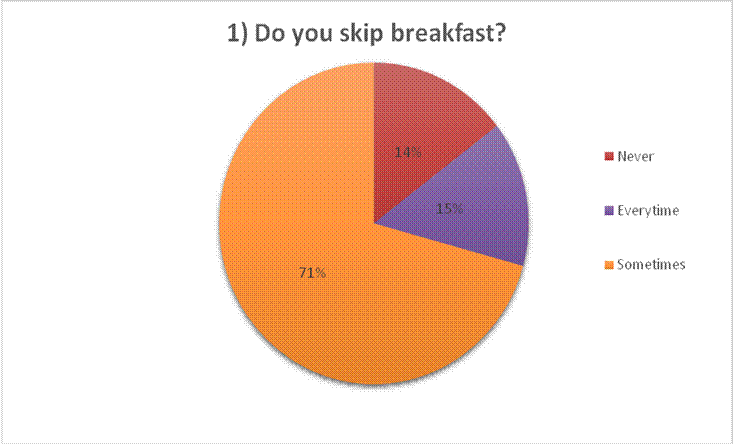
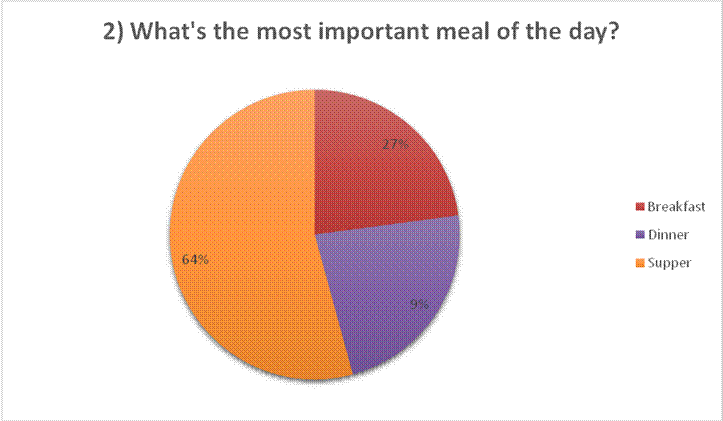
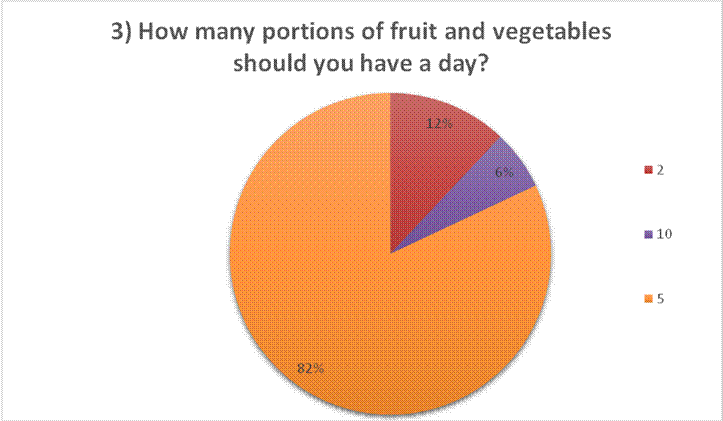
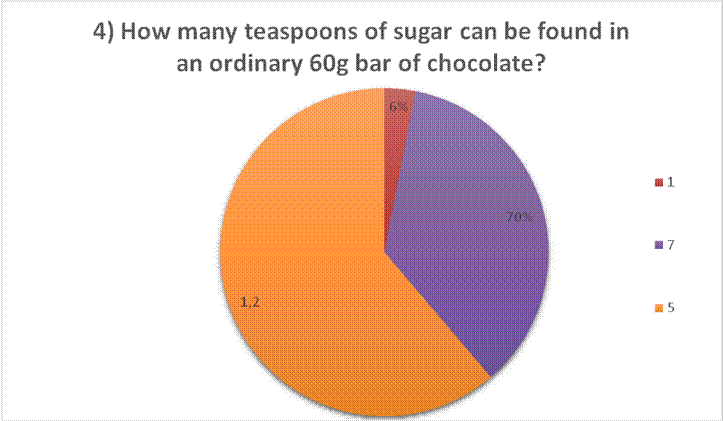
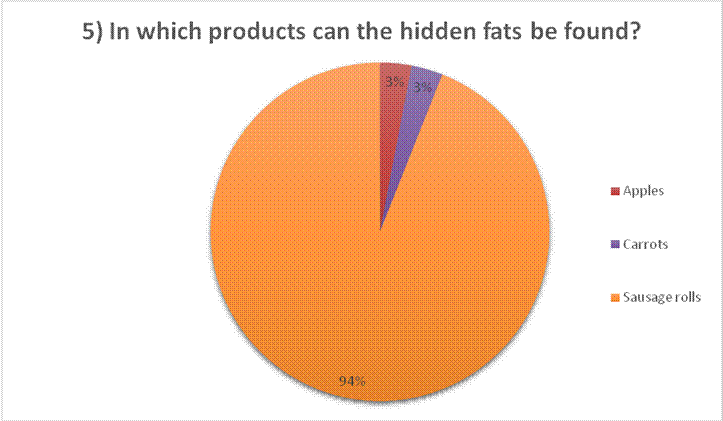
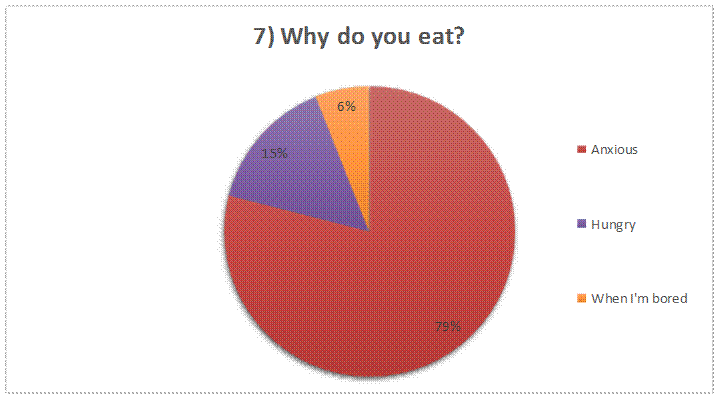
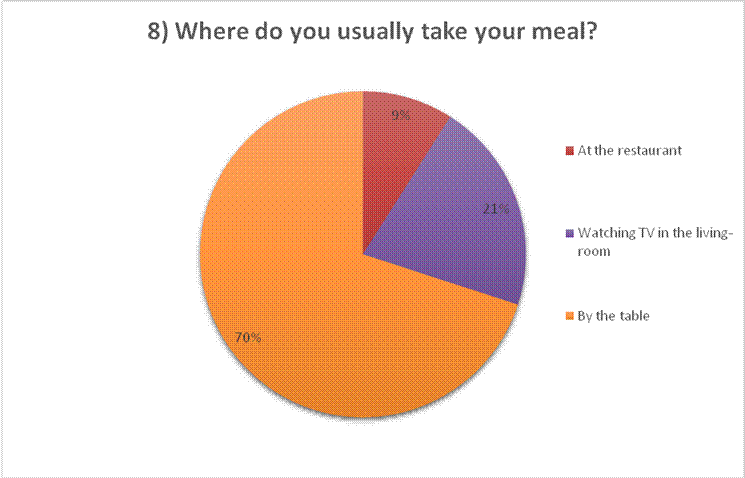
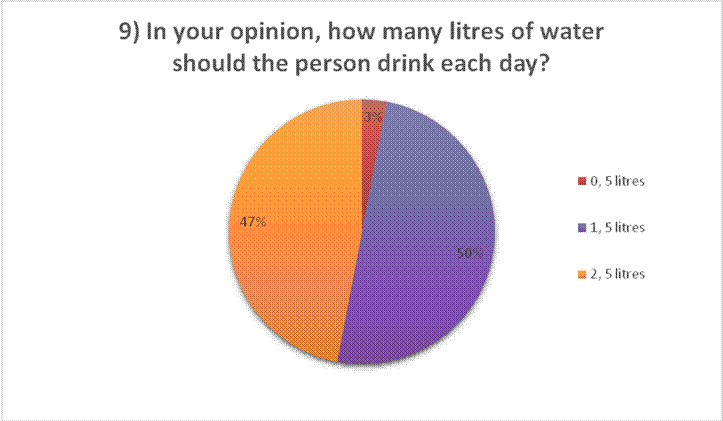
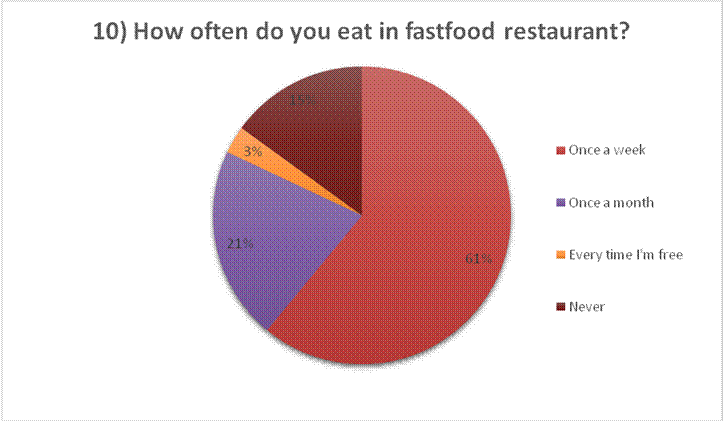

T: As you see the problem of healthy eating is really burning nowdays and needs deep futher explanation and research.Our bodies are a bit like a car. We need the fuel from nutrients that can be found in foods and drinks.But where do we find these specific nutrients and how do they help the body? To find out about the different food groups let’s look at the presentation you`ve prepared.
Supplement 3
T:Thanks a lot. So once more name all the nutrients our body needs to work properly.
carbohydrates
| ||
vitamins
| ||
Our body needs
|
minerals
|
to work properly.
|
fibre
| ||
fat
| ||
protein
|
Relaxation
T: Now let’s have a minute of relaxation.
Supplement 4
Reading Comprehension
T: And now I want you to get some new information about the balanced diets.
Pre-reading activity
Match definitions 1-5 with the highlighted words in the text.
1 Made from milk.(dairy)
2 Made in a factory.(processed)
3 Groups of cells of particular types.(tissues)
4 Information which proves something.(evidence)
5 The part of food we don’t digest.(fibre)
While- reading activity
Read the text. How does healthy eating affect our lives?
(Possible answers:
It can reduce the risk of illnesses such as heart disease, diabetes and perhaps even depression.
Eating regular meals can help with energy, as well as mood and memory.
Healthy eating affects our physical and mental health.)
Supplement 5
Have you got the balance right?
Healthy eating really does keep the doctor away and it may also help us feel better. A balanced diet along with regular exercise can reduce the risk of illnesses such as heart disease, diabetes and perhaps even depression. The human body needs three essential types of nutrient- protein, fat and carbohydrates – as well as fibre, vitamins and minerals. The key to healthy eating is getting the balance right between the different types of food. The perfect balance is to eat plenty of fruit, vegetables and carbohydrates, some dairy foods, meat and fish, but to go easy on the fats and sugars.
Nutritionists say we should eat at least five portions of fruit and vegetables a day to get all the vitamins and minerals we need. These also provide fibre which helps us digest our food and control our weight. Carbohydrates, such as bread, pasta and potatoes, provide calories and other nutrients and should make up at least a third of our diet. While protein is essential for building and repairing tissues, it only needs to make up about 15 % of an adult diet. The body needs fat to absorb some vitamins, and some fats like omega-3 fatty acids are essential for the brain and may even help learning. Foods rich in unsaturated fats, such as oily fish and nuts, are better than saturated animal fats which increase harmful cholesterol levels in our blood. Processed foods are particularly unhealthy because they are full of fats, sugar and salt and are very high in calories.
So far, there is little evidence to show that the type of food we eat affects our mood. But studies show that eating three meals a day affects the way we feel. Scientists believe that eating breakfast regularly is even more important. Studies show that it improves our mood and memory, gives us more energy and helps us to feel more relaxed.
Post-reading activity
Read the text again and choose the correct answers.
1 A healthy diet can…
a help to prevent heart disease.
b increase the risk of depression.
с reduce the need for exercise.
2 What type of food is the main source of vitamins?
a Oily fish.
b Carbohydrates.
c Fruit and vegetables.
3 We need around ____ of our daily diet to be protein.
a one third
b 15 %
с five portions
4 Why do we need oily fish or nuts in our diet?
a To provide calories.
b To absorb vitamins.
с To increase cholesterol levels.
5 Which fats are not good for us?
a Saturated fats.
b Unsaturated fats.
c Omega-3 fatty acids.
6 What has the most influence on the way we feel?
a The type of food we eat.
b Eating regular meals.
с Eating breakfast every day.
(keys: 1a,2c,3b,4b,5a,6c)
Complete the sentences about your diet. Discuss how healthy or unhealthy your diet is. What should you change?
1 l eat a lot of ___ and ___
2 l never eat ___ or ___
3 My favourite foods are ___ and ___
4 l have at least ___ snacks a day.
5 l ___ eat regular meals.
Summing up
We have learnt much about health, vitamins, healthy food and healthy way of life. And in the conclusion I think we shoud make this magic flower. I will give each of you a colored petal and you will fill in it writing what you do to have a right diet. And then you’ll come up to the blackboard and fix your petal round the center.
T. I’m glad to see that our magic flower is so beautiful and you remember the main tips of a balanced diet.
In conclusion, I’d like to thank you for your work at the lesson.I really appreciate your work during the lesson. I can say you’ve worked really very well today. And have shown me how much you are able to do. I can be really proud of you.Your marks are . . .
And the last moment of our lesson is your home assignment:ex.6p.46
==================================================================================================================================
5 клас «Здорова їжа»
Мета:
практична: формувати
рецептивні уміння на основі читання тексту з метою отримання загального
уявлення (skimming) та
максимально повного й точного розуміння всієї інформації, що міститься в ньому
(scaning);
освітня: поглибити
знання учнів про здорову їжу;
розвиваюча: сприяти
розвиткові самостійного мислення учнів;
виховна:
формувати моральний, позитивний режим спілкування при обміні думками,
підвищення мотивації до вивчення англійської мови. виховувати любов до здорової
їжі;
Обладнання: текст для читання,
картки, презентація Power Point, аудіо
запис, картинки з різними видами їжі
ХІД УРОКУ
1. Повідомлення теми уроку. Announcing
the topic
Teacher. Hello, everyone. Glad
to see you here and I’ like to start our lesson
with your prediction about the
subject of our discussion. I want you to
watch the presentation and say what we are going to discuss at the
lesson.
Presentation Power Point (food)
Teacher: What is the subject of our
lesson?
Pupils:
food (слайд)
Teacher:
What food do you like? What are your favourites? How do you think your food is healthy or
unhealthy?
2.Очікування .Робота з стікерами
Teacher:
Now I give you a peace of paper and all of you write what you expect to do
during the lesson. What would you like to do? (Слайд)
By
the end of the lesson you should be able:
to
talk about healthy or unhealthy food;
to
work in pairs and groups;
to
watch the presentation to find specific information;
to
improve your skills for reading, listening and comprehension;
to
develop your imagination;
to
develop communicative skills using the active vocabulary on the topic.
3.
Оцінювання.
Evaluation
You
would be given awards for every right answer. Stick them in your special
evaluation bill. By the end of the lesson you will show me your awards. The
mark will depend on your awards.
Мовна розминка. Warm- up
Teacher: Let’s read the poem
WHO
LIKES WHAT?
Some
of us like bread,
Some
of us like white,
Some
of us eat a lot of meat,
Some
don’t think it’s right.
Some
of us like apples,
Some
drink juice at night.
Some
of us eat many sweets,
Some
don’t think it’s right.
Teacher:
Tell me what do you like?
Do you know English proverbs about food? You
can find some on your desks, let’s read and choose motto of our lesson. So motto
of our lesson is “ Tell me what you
eat, and I will tell you what you are.”
Good!
In my opinion, this proverb suits our lesson quite well. There are many ways to
be healthy. One of them is eating healthy food.
II. Основна частина уроку
Аудіювання. Listening
Pre-
listening
Teacher:
Do you have breakfast? Say what your favourite
dish for breakfast?
Listening
Breakfasts around the world
Teacher: Listen to five people talking about
their breakfast. Write down what they have and exchange your cards and check
yourself . Greet your partner.
Recording
Kemal
Well, I usually have breakfast at
home before I go to work. I always have tea, black tea, maybe two or three
glasses. And I have cheese and eggs and tomatoes, and in Turkey
Dimitry
Well, for breakfast, when I have
time, I have tea, usually, black tea with lemon and lots of sugar. Never with
milk. Then I have bread and cold meat and some cucumber as well. And then I
sometimes have a small cake or some biscuits to finish.
Sonia
In Brazil, we have very good
tropical fruit, guava, mango and things like that, and we always have fruit for
our breakfast - also we have coffee, of course, everybody knows in Brazil
Post
- listening (слайд)
Discuss these questions.
a What do you usually have for breakfast?
b Are the breakfasts in the recording' the
same or different from yours?
c Which ones would you like to try?
Choose the right answer to the questions.
1.
Kemal usually has breakfast at …
a)
home b) café c) canteen
2.
Kemal always has two or three glasses
of…
a)
black tea b) coffee c) milk
3.
Mi- Kyung always has breakfast…
a)
at home b) with his family c) an café
a)
meat b) kim-chi c) pizza
5.
Dimitry likes to drink …
a)
coffee b) juice c) black tea
6.
Dimitry has … for breakfast
a)
eggs b) cold meat c) rice
7.
Sonia likes to drink …
a)
tea b) juice c) coffee
8.
Sonia always have … for breakfast.
a)
fruit b) meat c) omelette
9.
Jose has a cup of …
a)
tea b) milk c) coffee
10.
Jose go to a …
a)
canteen b) café c) bar
Let’s
check answers.
Write about your normal breakfast, lunch and dinner. What snacks do you
have?
2.
Читання. Reading
1). a) Match these foods to the pictures.
carrots chocolate
green vegetables grilled fish
lemons melon noodles nuts
pasta rice
b) Which of these foods contain ...
vitamins? • protein?
minerals? • a lot of calories?
2).
Work in pairs. Make a list of
eight foods that are healthy and eight
that are unhealthy.
healthy unhealthy
green vegetables chocolate
3).
a)
Read these ideas about healthy eating. Do you think they are true?
Compare ideas with other pupils.
Coffee and tea are bad for you.
There are 'good' foods and 'bad'
foods.
Vegetarian food is always healthy.
Fruit juice is good for you.
Carrots help you see in the dark.
It's okay not to eat breakfast.
b )
Read the text quickly and match the ideas to the paragraphs.
Food: Facts and myths
1. Fruit juice is good for you
True and false. Natural fruit juice
is good for you, but it can be bad for your teeth. So yes, have some orange
juice with your breakfast or lunch, but don't drink any juice between meals.
Try water instead. Up to eight glasses of water a day is good for you, and
water hasn't got any calories!
2. ______________________________
False. When you sleep you don't eat
for a long time and in the morning it's important to start the day with a good
breakfast. Without breakfast you often feel hungry later in the morning and
start eating biscuits or chocolate. These sugary snacks are not a good idea.
(If you want a healthy snack, try some nuts or melon.)
3. ______________________________
True and false. People drink coffee
when they are tired, but it isn't very healthy so don't have more than two cups
a day and don't drink any coffee before you go to bed. Tea is generally good
for you, but drink it with lemon and don't put any milk or sugar in it! Green
tea is especially healthy.
4.
______________________________
False. Vegetarian dishes often
contain a lot of cheese and oil and these can be very fattening. It's important
to eat some vegetables every day. (Doctors say five portions of vegetables
and/or fruit). We need the vitamins and minerals, especially from green
vegetables.
5. ______________________________
False. Carrots have a lot of
vitamin A and vitamin A is good for your eyes, but nobody can really see in the
dark!
6.
______________________________
False. There are good and bad
diets. For example, real chocolate contains vitamins and minerals and can help
you when you are tired. But it also has a lot of sugar, so don't eat it often.
Eat a balanced diet with some rice, pasta, bread or noodles and lots of
vegetables and fruit. You also need protein, from meat, grilled fish, cheese or
nuts. And you need oil: olive oil and fish oil are particularly good.
4).
Read the text again. Were you right in exercise 3a? Which information is
surprising?
5). What are your favourite foods? Which foods don't you like?
3. Говоріння. Speaking
1).
a)
Katie wants to eat healthily. Look at her shopping list on page 147 for
two minutes, then close your book.
b) Work in pairs. Can you remember
what Katie wants to buy? There are twelve things.
- Which
things from her list has she got?
- Which things from her list hasn't she got?
Is there any unhealthy food in her
shopping bag?
III. Заключна частина уроку:
1. Домашнє завдання. Homework
Write a letter to your friend about
your favourite food
2. Підсумки уроку. Summing up
What new information have you got?
Now let’s analyze your
expectations.
What food is healthy and unhealthy?
Write on pieces of paper and stick on our blackboard.
FOOD
| |
Healthy
3. Оцінювання. Evaluation
Give me your evaluation bills,
how many stickers do you have, such is
your mark, count please
========================
========================
Form 5
Theme: Food
Objectives:
Practical objectives:
-to activate the use of thematic vocabulary
(fruit and vegetables, food and drinks);
-to train and improve pupils’
listening, speaking, reading and writing skills;
-to improve pupils'
pronunciation;
-to learn the names of food
containers;
-to
make projects (“My Pizza”, “My Favourite Menu”);
Education
objectives:
-to expand the pupils'
knowledge on the topic given;
Developing
objectives:
-to develop the pupils'
ability of using their knowledge in new situations;
-to teach the pupils to work
in groups and pairs;
-to develop pupils'
imagination and attention;
-to incorporate creative
thinking, team-work;
Educative Objectives:
-to introduce competitive spirit
into a group (to play games);
-to foster the pupils to get
interested in learning English (to solve puzzles, to guess riddles, etc)
Teaching Aids:
Fruit
flashcards, Vegetable flashcards, Food flashcards, plastic food, a plastic bag,
a tray, a
ball of string (or yarn),
I
. Introduction. Greeting. (2’ )
Teacher: Hello, pupils! I’m glad to see you. How are you today?
Take your “faces” and if you
feel great – draw a smile; if you feel neither
great nor bad, draw a face without a smile; and
if you are sad and unhappy,
draw a sad face. Now show me your faces, please. Well, I see that everybody is
happy so we can start our lesson. (Or:
Some of you are not happy, but I am sure your mood will change to the end of
the lesson.)
II.
Phonetic Warm up. (2’ )
Teacher: You can
see sounds and pictures on a theme “Meal”.
Connect sounds and pictures.
III. Homework checking. (2’ )
Teacher: For today to you has been set to prepare the project
“My pizza”. Who wants to show the work? (Some of pupils present their
projects.)
IV. Warmer: (4’ )
Teacher: Can you guess the
answer to the fruit or vegetable riddle?
1) I can be red or green or yellow. I
grow in the tree in the garden. I am
tasty in autumn and in winter. What am I?
(apple)
2) I am very small. I am red.
I grow in the orchard. I am ripe in summer. My first letter is “C”. Children
like jam with me. What am I? (cherry)
3) It is yellow and long. It
is very tasty. (banana)
4) The berry which grows on
the straw. (strawberry)
5) It has very many shirts .
it is white and round (cabbage)
6) It is green and long. We
make salad from it. (cucumber)
V. Speaking
1) Microphone. What do you like to eat for breakfast?
2) Snowball
Teacher: Robin-Bobby likes to eat
very much. He is a great eater! Now let's play the game "Robin-Bobby".
Pretend you are Robin-Bobby and say what you would like to eat and drink. The one who "eats" most is
Robin-Bobby.
P1: I would like to eat soup. P2: I would like to
eat soup and bread.
P3: I would like
to eat soup, bread and meat, etc.
VI. Reading (7’ )
Read to know more about English people:
The English have four meals a day: breakfast, lunch, tea and dinner or supper.
In England
We know that some of you don't like porridge. But English people like
porridge very much. They usually eat it for breakfast. They like to eat
porridge with milk.
English people don't eat
much bread. They never eat bread with meat or vegetables. But they sometimes
eat bread with soup.
Read the questions in A and
choose the right answers in B:
A
1. Do English people like porridge?
2. How many meals a day do the English have?
3. When is breakfast time in England
4. Do the English eat porridge for breakfast or for dinner?
5. Do English people drink a lot of tea?
6. Do the English drink tea from cups or glasses?
B
a. They have four meals a day.
b. In England
c. They
eat porridge for breakfast.
d. They
drink tea from cups.
e. Yes,
they like porridge very much.
f. Yes, they drink a lot of tea.
1 __
2 __
3 __
4 __
5 __
6 __
VII. Listening: You are going to listen a
text, but before that let`s remember some words.
To be hungry – бути голодним
To be thirsty – хотіти пити
Burger – бутерброд
Lunch
at School.
Twelve o`clock
is the time for lunch in our school. Children are running to the school cafe.
They are thirsty and very hungry. Today they have some potatoes and some fish,
a glass of tea and some biscuits for their lunch. There are also different
kinds of burgers, pizzas and salads. Pupils can buy bottles of water, cans of
lemonade or cartons of juice. My friend Pete likes to buy a bar of chocolate or
a box of sweets. We like to have lunch at school.
Discussion: What is this text about? (This text is about lunch at school)
Where do children have their lunch? (They have their lunch at school)
Are they thirsty and hungry? (Yes, they are)
What can they drink there? (They can drink
water, lemonade and juice)
Checking of
understanding:
Now let`s see how you
understand the text. Do the test.
Test
1. Children can have lunch at …
a. School b. home c. work
2. They have lunch at …
a.12 o'clock b. 1 o'clock c. 2 o'clock
3. The pupils … after the lessons.
a. Go home b. do homework c. are hungry
4. Today
they have …
a. Some potatoes
and some fish
b. Some rice and
some salad
c. Some porridge
and some meat
5. Pupils can buy …
a. Flowers b. bottles of water c. some butter
6. My friend Pete likes to buy…
a. Oranges
7. We like to have lunch at …
a. Home b. the lesson c. School
1.a 2.a 3.c 4.a 5.b 6.b 7.c
Relaxation: Pupils recite the poem
and do some actions:
Bread
and butter, milk and tea,
Put your finger on your knee.
Bread and butter, cake and ice,
Put your hands on your eyes.
Put your finger on your knee.
Bread and butter, cake and ice,
Put your hands on your eyes.
Bread
and butter, milk and pie,
Put your finger on your eye.
Bread and butter, juice and eggs,
Put your hands on your legs.
Put your finger on your eye.
Bread and butter, juice and eggs,
Put your hands on your legs.
VIII. Work in groups. (3’ )
Group 1 Write
the words under the correct basket: apple,
salad, bread, biscuit, egg, rice, water, banana, milkshake, pasta, melon,
orange
countable
uncountable
_____________________
____________________
_____________________
____________________
_____________________
____________________
_____________________
____________________
IX. Splash. (6’ )
Teacher: Can you
cross the river? When you step on a stone, say the word. Each letter on the
stones is the first letter of one of the words in the box. If you take more
than 30 seconds your partner says ‘Splash’ and you fall in the water.
X.
Homework
- Project “My Favourite Menu”
Pupils think what they would like to have on each day of the week.
Pupils draw their favourite dishes and write
their names.
XI.
Summing-up
Teacher: Today you have worked very well and I liked
your work. You were active; you have used many different words. The lesson is
over. Thank you very much. Goodbye.
===========================================================
6 клас Food- Закрепить лексику по теме «Еда».
- Закрепить грамматический материал шестого цикла.
- Проверить уровень усвоения учащимися лексического и грамматического материала.
- Провести контроль основных видов речевой деятельности учащихся.
- Практиковать учащихся в устной речи, аудировании и чтении.
Учебные пособия: картинки с изображением различного количества разных продуктов, магнитофон.
План урока:
I. Организационный момент.
П. Фонетическая зарядка по теме «Еда».
-Sweet, ice cream, meat, cheese, mushroom, onion, honey, few, a few, a few eggs, a few apples
III. Речевая зарядка:
Т.: What is this?
How many sweets are there in the picture? How much milk is there in the glass? Do you like milk? и т.д.
На доске задания, которые выполняется всем классом.
Find the odd one out.
- cucumber, tomato, pepper, bread.
- cheese, salt, banana, water.
- chocolate, onion, ice cream.
- juice, coffee, tea, ice cream.
Find the words.
| M | V | C | O | F | F | E | E |
| I | S | U | H | T | S | F | H |
| L | E | C | H | E | E | I | E |
| K | G | U | J | A | M | S | F |
| H | A | M | E | A | T | H | O |
| O | A | B | E | E | F | N | O |
| N | R | E | S | T | G | E | D |
| E | O | R | R | I | D | G | E |
| Y | S | S | E | G | G | A | H |
IV. Для проверки знания лексики можно провести задание в игровой форме.
Play a game.Встаньте в круг и скажите своё имя и название любого продукта питания, который начинается на ту же букву, что и ваше имя. Каждый последующий участник должен начать с перечисления имен предыдущих игроков и названий продуктов питания, а закончить своим именем и названием продукта, начинающегося на ту же букву.
Model.
- I am Anya. I like apples.
- She is Anya. Anya likes apples. I am Boris. I like bananas.
Play a game . «What do you think about it?»
In big groups ask and answer questions about food. Use these phrases:
I like it. I do no like it. It is OK. It is very nice. I do not eat it. Ihate
V. Тренировка материала: повторение количественных местоимений
Fill in the gaps with some or any.
They have ... milk.
My aunt doesn’ t read ... newspaper.
Do you have ... questions?
We need ... eggs and ... milk.
He doesn’ t have ... water.
Write very few or very little.
We have … butter.
There are … animals in the zoo.
There are … hotels in this town.
We have … juice.
This winter is not very cold. There is … snow.
VI. Развитие диалогической и монологической речи учащихся.
Teacher: Listen, read and guess the meaning of the underlined words.
Прослушивание аудиозаписи.
Misha: I'm hungry. Let's have a snack!
Robin: But Betsey isn't in.
Alice: Is there any food in the fridge? Let's see. We have some milk, some butter, some ham, some cheese, some fish, some tomatoes and some bananas.
Robin: Can we make an omelette?
Alice: No we can't because we don't have any eggs.
Misha: Can we make ham and cheese sandwiches?
Alice: No we can't because we don't have any bread.
Misha: Can we make fish and chips? Alice: No, we can't because we don't have any potatoes.
Betsey: Hi, guys! Are you hungry? Let's go shopping!
Teacher: Well, now answer the questions.
1. Why can’ t the children make an omelette?
2. Why can't they make ham and cheese sandwiches?
3. Why can’ t they make fish and chips?
VII. Listen, read and find a name for the song
Winter does not bring much cold,
Autumn does not bring much gold,
Summer does not bring much sun,
Birthday does not bring much fun.
Перепишите песенку mак, чтобы всё в ней соответствовало действительности.Use a lot of.
Winter brings a lot of cold,
Autumn brings a lot of gold,
Summer brings a lot of sun,
Birthday brings a lot of fun.
VIII. Подведение итогов урока
====================================================================================
Розробка уроку у 5 класі
«Покупки»
Тема: Покупки
Мета: повторити назви харчових продуктів та магазинів;
удосконалювати навички читання та перекладу; розвивати навички усного мовлення;
розвивати мовну здогадку; виховувати культуру спілкування; прищеплювати
цікавість до навчання.
Обладнання: підручник, робочий зошит, аудіо запис уроку,
картки для індивідуальної роботи, картки для роботи в парах, машинка, вирізана із паперу, малюнки із
зображенням вивісок магазинів та продуктів харчування.
Тип уроку: урок-подорож
Хід уроку
І. Вступна частина уроку.
1.
Привітання:
- Good morning children! I am
glad to see you.
- Good morning teacher!
2. Тема і мета уроку.
Учитель. Любі діти! Сьогодні
ми з вами продовжимо працювати над темою “Shopping”. Ми повторимо вивчену лексику та ознайомимось з новими
словами. Для чого це нам потрібно? Для того, що в кінці уроку ми зможемо
скласти діалоги на англійській мові, навчимося правильно називати назви
магазинів та повторимо вже вивчені слова.
1.
Уведення в іншомовну атмосферу.
А зараз давайте трішки пограємо.
Гра “Ukrainian ball – English ball” (учитель кидає м’яч і
називає слово українською мовою, а учні перекладають слово англійською.
Хліб,
молоко, м'ясо, зубна паста, картопля, сир, мило, газета, шампунь, книга, газета.
Основна частина уроку.
Учитель. Сьогодні. діти, у нас незвичайний урок.
Ми будемо з вами подорожувати. Do you like travelling? (на дошці зображений план подорожі).
1зупинка.
а)повторення назв продуктів харчування;
б)вивіски на магазинах;What can we buy there?
2 зупинка. Вірші про
магазини.(активізація вивченої лексики впр.1,ст.85)
Complete the sentences.
1) Do you like bread and
cakes? Go and buy it at the baker’s.
2) If you want to read some
books, go to the newsagent’s.
3) There are lots of sausages
and meat at the butcher’s
4) If you need shampoo and
soap, go to the chemist’s
3
зупинка.”Magic
sentences “(робота в парах).
Учитель. Наступна зупинка –
магічні речення. Кожна пара отримує картки з реченнями. Їх треба записати в три
колонки: розповідні, заперечні та запитальні.
1) It is a big shop.
2) Is it open?
3) I do not like to read newspapers.
4) Can I help you?
5) I can buy toy for my brother.
6) You can not buy meat at the chemist’s. (учні
записують, а потім обмінюються листочками і виправляють помилки сусіда)
+
|
-
|
?
|
1,
5
|
3, 6
|
2, 4
|
4 зупинка. Фізкультхвилинка.
Hands up
Hands down.
Hands on hips
Sit down.
Stand up
Hands to the sides
Bend right.
One, two, three – hop.
One, two, three – stop.
5 зупинка. Revising the vocabulary.
What words about shopping do
you know?
Які слова про покупки та магазини ви знаєте?
(спочатку учні називають слова, які запам’ятали з минулих уроків з теми “Shopping”, потім учитель просить
повторити слова.
Repeat after me:
Banana, orange, ice cream,
caf?, pizza, chocolate, tomato, magazine, newspaper, soap, shampoo, toys,
toothpaste.
(учні повторюють слова за вчителем)
6 зупинка. New words. Знайомство з новою
лексикою.
Ex. 1, p. 87. (прослуховування аудіо
запису)
(пояснення слів)
ü department – (відділ) універмаг (store)
ü tourist – турист.
ü market – ринок, базар.
ü souvenir – сувенір.
(учні повторюють слова за
вчителем)
7 зупинка.
Учитель: Добре, діти! Ми з вами
повторили всі слова з теми “Shopping”, вивчили декілька нових слів. А зараз давайте спробуємо
скласти декілька діалогів за зразком. “In the shop” (учні складають діалоги)
-
How much is a chocolate?
-
It is 8
pounds .
-
How much are bananas?
-
They are 11 pounds .
8 зупинка. Do you like to
play?
Game: А зараз ми перевіримо, як
ви засвоїли назви магазинів та те, що можна в них купити.
Робота в групах (2 групи отримують по набору
карток, де є назви товару і магазинів.) Треба правильно їх згрупувати.
Key: 1c, 2c, 3b, 4a, 5d, 6c, 7a, 8b, 9d, 10f .
III. Заключна частина уроку.
1.
Домашнє завдання.
(вчитель роздає учням аркуші із завданням)
2.
Summarizing (Чого навчились? Що було найцікавіше? Які слова
запам’ятали на уроці?)
Game: робота в групах. Які слова з теми “Shopping” ви запам’ятали?
(їжа, магазини, …..)
=============================================================================================================================
Form 8
The subject: New Year and Christmas in Great Britain and in Ukraine
The objectives: to develop the skills in auding, speaking and reading in
culturological texts;
to
improve the grammer skills using Participle I and
Participle II;
to revise
the topic “Winter holidays”;
to bring up the respect
to folk traditions and customs
Visual aids: tape-recorder, cassette, pictures, handouts
The procedure of the lesson:
1. Greeting, organizing moment. Introduction.
2. Warming-up activities.
3. Listening to the text “Christmas Twice”.
- Pre-listening activity. Acqainting with unknown words.
- Listening the text.
- Post-listening activities: a) answering the questions;
b) comprehension check (true or false);
c) matching the dishes to their descriptions.
4. Checking home assignment.
- Pupils’ reports about celebration Christmas holidays.
- Home-reading: “New Year in English-speaking countries”
Retelling the text and answering the questions.
5. Reading the text “Christmas in Great Britain
- Reading the text and discussing the most interesting facts.
- Putting the sentences in the right order.
6. Writing. Grammar.
Choosing the correct form of the Participle I and Participle II
7. Summing up. Evaluation pupil’s work.
8. Setting home assignment:
preparing reports about Saint Nickolas.
9. Song “Holy Night”.
8класSubject: New Year and Christmas in
Proverbs: Every country has its customs.
So many countries so many
customs.
Christmas comes but once a year.
Christmas comes but once a year.
Aim: 1. to develop the
skills in auding, speaking and reading in
culturological
texts;
2. to improve
grammar skills using Participle I and Participle II;
3. to revise the topic “Winter holidays”;
3. to revise the topic “Winter holidays”;
4. to bring up
the respect to folk traditions and customs.
Visual aids: tape-recorder, cassette, pictures, handouts.
Visual aids: tape-recorder, cassette, pictures, handouts.
Procedure:
1. Greetings and
presentation of the plan of the lesson.
T – Good morning pupils.
Ps – Good morning, dear teacher.
T – Today we have got guests. Let’s greet them.
Ps – Good morning, dear guests.
T – I’m glad to see you, pupils.
Ps – We’re glad to see you too.
T – So, pupils, how are you?
Ps – Very well! Thank you.
T – All right! Sit down, please and let’s start our lesson. The first semester is coming to the end. I know you have much to do – tests in different subjects, a lot of revision. But the end of December is special because we are looking forward to the New Year and Christmas. So, the topic of our lesson is “New Year and Christmas inGreat Britain
and in Ukraine Great Britain
2. Warming-up activity. Dialogical speech.
T – Let’s start with asking and answering the questions according to the topic: “Winter holidays”, using such expressions as:
It’s interesting to know... I wonder... Can you tell me... Do you know...
Ps – Good morning, dear guests.
T – I’m glad to see you, pupils.
Ps – We’re glad to see you too.
T – So, pupils, how are you?
Ps – Very well! Thank you.
T – All right! Sit down, please and let’s start our lesson. The first semester is coming to the end. I know you have much to do – tests in different subjects, a lot of revision. But the end of December is special because we are looking forward to the New Year and Christmas. So, the topic of our lesson is “New Year and Christmas in
2. Warming-up activity. Dialogical speech.
T – Let’s start with asking and answering the questions according to the topic: “Winter holidays”, using such expressions as:
It’s interesting to know... I wonder... Can you tell me... Do you know...
I want to know... Tell me, please...
So, pupils, ask and answer the questions. Mind your intonation. Please,
start.
P1 – It’s intetrsting to know where did you celebrate New Year party
last year at home with your family, relatives or in the restaurant with your
friends?
P2 – Last year I celebrated New Year party with my friends in the
restaurant. And it’s interesting to know where did you celebrate New Year
party?
P3 – Last New Year party I selebrated at home with my family and with my
relatives. I wonder did you go to the village or stay at home during Christmas
holidays?
P4 – During my Christmas holidays I went to the village with my family to celebrate Christmas and to have the Holy Supper with our grand-parents. Can you tell me when did you celebrate Christmas? I mean the date: the 25th of December or the 7th of January.
P5 – We celebrated Christmas on the 7th of January with my family.
P4 – During my Christmas holidays I went to the village with my family to celebrate Christmas and to have the Holy Supper with our grand-parents. Can you tell me when did you celebrate Christmas? I mean the date: the 25th of December or the 7th of January.
P5 – We celebrated Christmas on the 7th of January with my family.
And I want to know how many dishes did you have during the Holy Supper?
What were they?
P6 – You Know that Holy Supper has 12 lenter dishes symbolic of the 12 Apostles who gathered with Jesus Christ at the last Supper. The meal is traditionally meatless and milk free. We had such dishes as kutia, beans, fish, varenyky (pyrogy), holubtsi, mushrooms, borhch, buns with fruit and poppy stuffing and compote made from dried fruit.
P6 – You Know that Holy Supper has 12 lenter dishes symbolic of the 12 Apostles who gathered with Jesus Christ at the last Supper. The meal is traditionally meatless and milk free. We had such dishes as kutia, beans, fish, varenyky (pyrogy), holubtsi, mushrooms, borhch, buns with fruit and poppy stuffing and compote made from dried fruit.
Tell me, please, did you go out singing carols with your friends and
relatives?
P7 – Yes, I did. I went out singing carols with my friends and with our
neighbours. And I wonder did you get any presents during Christmas holiday?
P8 – No, I didn’t.
P7 – Why not?
P8 – Because it isn’t a Ukrainian tradition. I got many presents during
New Year holiday. Do you know in which countries do people have the tradition
to give presents during Christmas holiday?
P9 – I know that children inGreat Britain ,
in USA
P9 – I know that children in
P10 – Yes, we had the New Year Three and decorated it with all our
family because the Green Tree is the symbol of life. And during Holy Supper we
put a decoration made from wheat, so-called “Didukh” as the symbol of
prosperity.
T – So, you see. “So many countries so many customs”.”Every country has its customs”. These are proverbs of our lesson. Remember them.
T – So, you see. “So many countries so many customs”.”Every country has its customs”. These are proverbs of our lesson. Remember them.
|
3. Listening the text “Christmas Twice”.
1) Pre-listening
activity. Acqainting with unknown words.
T – And now, pupils, look at the pictures and say what these people are
celebrating? Why do you think so?
P – To my mind these people are celebrating Christmas. I think so
because they are wearing festive Ukrainian clothes, they are playing the music
and singing songs. To my opinion these songs are Christmas carols. So, it is
Christmas.
T – We’ll listen to the text “Christmas Twice”. Pay attention to the
unknown words. Let’s read and explain them.
Pope Gregory XIII – папа
Григорій ХІІІ
Beloved -- улюблений
To fall behind
--відставати
To introduce –вводити
Kernel -- ядро
To stick to smth. – дотримуватись чогось
2) Listening.
T – Now listen to the tape-recorder. Please, be attentive. Mark all the
dates mentioned. Try to understand what the date is mentioned more than once.
T – Listen to the text.
3) Post-listening
activities.
a) Answering the questions.
T – So, pupils, tell me what the text is about?
P1 – The text is about Christmas in December and in January.
T – What the date is mentioned more than once? Which date mentioned in
the text does not appear on the calendar?
P2 – The date – the 25th of December is mentioned twice. But
this date does not appear on the calendar.
T – How do you think, why?
P2 – Because only the seventh of January is the state holiday in Ukraine
b) Comprehension check (true or false).
T – Now let’s check up how did you understand the text. Choose the
correct answer. Is it true or false? Why do you think so?
The correct answers.
1. – It is false because most Christians celebrate
Christmas on the 25th of January.
b) Check up how did
you understand the text. Choose the correct answer. Is it true or false?
1. Most Christians celebrate Christmas on 7th January
according to the Julian calendar.
a) true b) false
2. Gregorian calendar was introduced by Pope Gregory XIII in 1582
a) true b) false
3. Gregorian calendar falls behind the solar year by about one day every
century.
a) true b) false
4. Ukraine
a) true b) false
5. The Ukrainian Orthodox Church still uses Gregorian calendar.
a) true b) false
6. Most Ukrainians celebrate Christmas 14 days later, on 8th
January.
a) true b) false
7. Ukrainian Catholics stick to the Gregorian calendar and celebrate
Christmas on 25th December.
a) true b) false
8. Christmas isn’t the most beloved holiday in Ukraine
a) true b) false
9. On Christmas Eve, ( Sviat Vechir ) the family has a holy supper of
Twelve symbolic dishes.
a) true b) false
10. The meal is meat- and milk-free.
a) true b)
false
2. –It is true because it’s a historical fact.
3. –It is false because the “Old Style” Julian calendar falls behind the
solar year by about one day every century.
4. –It is true because this is a historical fact.
5. –It is false because the Ukrainian Orthodox Church still uses Julian
calendar.
6. –It is false because we know that most Ukrainians celebrate Christmas
13 days later, on the 7th of January.
7. –It is false. Ukrainian Catholics stick to the Julian calendar and
celebrate Christmas on the 7th of January.
8. –It is false. Cristmas is the most beloved holiday in Ukraine
9. –It is true because 12 lenter dishes symbolic of the 12 Apostles.
10. –Yes, it is true because during Holy Supper the meal is meat- and
milk-free.
c) Matching the dishes to their
descriptions.
T –Usually we prepare for holidays. We do the house, put a fir-tree and
cook something tasty. Let’s remember the dishes we serve during Holy Supper and
Christmas dinner. Listen to these descriptions and guess how do we call this
food.
Match the dishes to their descriptions.
1. Kutia- a)boiled potato dumplings
2. Varenyky- b) stuffed cabbage rolls
3. Holubtsi- c) a dish of honey, poppy seeds and
wheat kernels
4. Buns- d) a dessert made from dried
fruit and
honey
5. Compote- e) a dish of beet, carrot, onion,
cabbage,
potatoes,beans and
tomatoes
6. Borshch- f) stuffed small round sweet cakes
4. Checking up home
task.
1) Pupils’ reports
about celebration Christmas holidays.
T – Pupils, I know you have prepared reports on topic “How I spent my
last Christmas holiday.” I would like to listen to your projects.Who wants to
present the project?
Pupils’ answers.
===================================================================== ======================================================================== |
5 клас
Тема: Подорож до
Великобританії.
Мета: Навчити учнів
розповідати про частини Великобританії. Вчити пошуку необхідної інформації в
процесі ознайомлювального читання, вчити узагальнювати та використовувати на
практиці отриману інформацію з теми. Практикувати у вживанні граматичних часів
дієслова.
Розвивати
довготривалу пам’ять, увагу, уяву, уміння самостійно планувати мовний вчинок,
вміння навчальної співпраці при виконанні колективних проектів.
Розширювати
знання учнів про країну, мова якої вивчається.
Виховувати
культуру спілкування, повагу до традицій іншого народу.
Обладнання: карта
Великобританії, прапори та символи частин Великобританії, портрет Р. Бернса,
аудіозапис вірша Р. Бернса “My Heart’s in the Highlands”,
роздатковий матеріал, мультимедійна презентація.
ХІД УРОКУ
І. Організаційний момент.
1) Оголошення теми та мети уроку
Звучить аудіозапис
вірша Р. Бернса “My Heart’s in the Highlands”.
My
heart’s in the Highlands , my heart is not
here,
My
heart’s in the Highlands a-chasing the deer,
A-chasing
the wild deer and following the roe -
My heart’s in the Highlands , wherever I
go!
Teacher: You’ve just
heard some lines from the poem, written by R. Burns. This famous poet loved his
Motherland and admired its beauty. Do you know where he was born? (Expected answer: In Scotland
Yes,
he was the Scottish and wrote about Scotland Great Britain England , Wales ,
Northern Ireland Great
Britain
2) Уведення в іншомовну атмосферу.
Teacher: Do you know
why people travel?
Mind Map |
People
travel to…
Teacher: So, during
our tour we’ll see new places, learn more about Great Britain
Unfortunately
we have only 2 days for visiting the UK
ІI. Основна
частина уроку.
1. Актуалізація раніше вивченого матеріалу.
Teacher: It’s useful
to know some facts about the country you are going to visit. On the blackboard
you can see 4 parts of Great
Britain
2. Уведення нової лексики.
Teacher: And now some
proper names necessary for understanding our guide’s speech.
W.
Shakespeare
R.
Burns
Eisteddfod
3. Читання (робота в групах).
Teacher: Oh, it’s a
message from our travel agent. Our guide has fallen ill, he can’t go with us.
What shall we do? I’ve got an idea! We have these leaflets with information
about Great Britain
You’ll
be organized in groups of 3. Each group will get a set of pictures, the UK
Information Guide and a fact file. Your task is to represent one part of Great Britain
The UK
(where to go and what to see)
Capital: London
People: the
English
Language: English
You should start your tour with London ,
the capital of Great Britain Trafalgar Square ,
Westminster England
is not only London Oxford and Cambridge Stratford-upon-Avon
is the birthplace of Shakespeare. Stonehenge is situated in the south-west of England
Capital: Edinburgh
People: the Scots
Language: English,
Scottish
This is a land of high mountains and green valleys. The highest
mountains are situated in the Highlands . The
national dress of Scots is the kilt, which was originally worn by men. It is a
skirt with a lot of folds. The Scottish musical instrument is the bagpipe. The
festival, celebrated by the Scots on the 25th of January is called Burns’
Night. It is the birthday of Robert Burns. During the festival people play pipe
music, wear kilts and recite Burn’s poems.
Capital: Cardiff
People: the Welsh
Language: English,
Welsh
It is a country of lakes and mountains. The second highest mountain in
Great Britain Snowdon is situated here. The Welsh are famous for their singing
ability. Every year an international festival called Eisteddfod is held in Wales
Capital: Belfast
People: the Irish
Language: English,
Irish
This part of Great
Britain is often called Ulster Ireland Northern Ireland
Fact file
of the UK
Capital
|
||||
Emblem
|
||||
Flag
|
||||
Language
|
||||
Interesting facts
|
||||
Attractions for tourists
|
4. Монологічне мовлення.
Teacher: Let’s
start our trip on a jet airplane. Fasten your seatbelts.
(Групи по черзі презентують 4
частини Великобританії).
5. Контроль знань.
Teacher: Your
English is rather good and you know a lot about Great Britain
Finish the sentences.
1) In London
2) The highest mountain in Great Britain
3) The birthplace of Shakespeare …
4) The flag of Wales
5) The Irish musical instrument …
6) Cambridge and Oxford
7) Burns’ Night is a festival in honour of …
8) Eisteddfod is held in …
9) On St Patrick’s Day people …
Congratulations! You’ve passed this exam.
6. Письмо.
Teacher: While
we are abroad our mums worry about us. Let’s send them postcards.
The task is to put the verbs
in brackets in the correct tense.
Hi, Mum!
We ____________ (to
be) in Northern Ireland England ,
Scotland , Wales
Kisses, ___________
7. Усне мовлення.
Teacher: It’s
time to return home. What are your impressions of our journey? Did you like it?
Imagine that you have just returned from Great Britain
ІІІ. Заключна частина уроку.
1. Підведення підсумків.
Teacher: What
have we done at the lesson? (Expected
answers:
- We have seen new places.
- We have learnt more about Great Britain
- We have practiced our
language.
- We have developed outlook…).
What can you do now? (Expected
answers:
- We can speak about different
parts of Great Britain
- We can work as guides in a travel agency…).
2. Домашнє завдання.
Write a story “My visit to Great Britain
===================================================================================================== Theme: “HOBBY”.5 клас
Мета:
виховувати поважне ставлення до хобі своїх однокласників, розвивати мовну
здогадку,мовленнєві навички, творче мислення, тренувати у вживанні вивчених
граматичних структур, активізувати лексичні навички мовлення сформовані на попередніх
уроках,удосконалювати навички читання, письма та усного мовлення.
Тип уроку комбінований
Обладнання: підручник
О.Д. Карп’юк 5 клас, ілюстрації із зображенням хобі, ксерокопії із завданням
для читання, комп’ютер,проектор.
Procedure
The beginning of the lesson
Greetings
T:Good morning
children! How are you?
Ps: We are fine,
thank you. And you?
T: I’m fine, thank
you.
Phonetic Drill
T: Let’s start our
lesson with the poem
I like reading comic books.
I always read a lot.
I like collecting action toys.
Sometimes it’s hard to stop.
I like swimming for our team.
We win a lot of races.
I like singing, painting, drawing …
I like hiking in wild places.
I like to study every day.
I like to jump, I like to run,
I like to play, it’s fun!
(After reading the
poem some words are cleaned up by the teacher)
The theme of
the lesson.
T: Look at the pictures and say what are we going to speak
about.
T: The theme of our
lesson is Hobby. Name the hobbies you can see on the pictures.
T: What is hobby?
P: A hobby is an
activity we always like doing!
The main part of the lesson.
Grammar
Training.
1)повторення
вживання структур:
T:Let`s brush up in
our memory the structures I am fond of/ I
am interested in.
I am
fond of
V+ing
I
am
interested
in
(Ha
дошці записані вирази, діти повторюють за вчителем,
перекладають.)
1) T: But
before you make the sentences add - ing ending to the verbs.
As you remember ing ending is important with the verbs
in these structures:
______(sing) songs
_______(listen)to music
______(take)
photos
________(watch) films
______(go) to the
museum
_________(read) books
______(collect)
stamps
_________(make) bird-houses
______(write) poems
2)T: Make up
sentences using structures: I am fond of/I am
interested in.
Hobby
riddles:
T: Listen to the descriptions of the
hobby. Name it.
This can be an indoor or outdoor activity. You need a
ball to play. Are you tall?
Do you like
jumping? This is good for you!
(volleyball)
This is something to do with friends. It is an outdoor
activity. Do you like the countryside? Do you like walking? This is a good
activity for you! (hiking)
Some
people like to dance. Sometimes they go to special dance clubs or dance at home
or go to the disco clubs.
(dancing)
They
can play football or hockey, swim or run very well. People like to go to the
stadium or they go to the sports ground.
(sports)
People
like listening and singing songs. Some of them can go to special music
schools. (singing)
People
can travel by car, by plane, by train, by plane or on foot. They like to visit
different cities, countries. It helps them to learn history, geography,
traditions. (travelling)
Pair
work
T: Divide the hobbies into two
columns
Like
|
Dislike
|
T: Write 3 or 4 of them. Ask each
other:
T: What do you like doing?
P: I like …
T: Ask each other about likes and
dislikes.
P:
Do you like…?
P:
Yes, I do. (No, I don`t). And you?
Dialogues.
Checking home task.
Dialogue
1.
P:
Do you have a hobby ……?
P:
Yes, I do. And what about you?
P:
I have a hobby too.
P:
What is your hobby?
P:
My hobby is playing computer games. And you?
P:
I like playing tennis, it`s my favourite
hobby.
Dialogue
2
P:
Have you got a hobby?
P:
Yes, I have. And you? Have you got a hobby?
P:
I enjoy collecting coins. I have a large collection of coins nearly about 250
coins. My father is a journalist, he brings them from different countries. And
what do you like doing in your free time?
P:
I like swimming. I go in for swimming for two years. I take part in
competitions and I have 2 medals already. Besides, I like fishing.
Speaking
T: Do you have a hobby? What is your
hobby?
(Pupils tell about their hobbies,
showing the pictures.)
Reading
T:
Now we are going to read the text and do some tasks.
Many pupils of our
school have interesting hobbies. Lara is 11 years old. She likes writing poems
and painting pictures.
Tom is 15 years old
and he has very interesting hobbies. He likes dancing,
designing Internet
sites and playing the piano.
Robert is almost 13
years old. His hobbies are playing football and reading detective
stories. Our pupils
do many interesting things and they are very busy.
They also love
different subjects. Tom is the best pupil at math. Lara is good at art and
literature and Robert is one of the best pupils at PE. Their hobbies help them
study well too.
Tick T(true) or F(false).
Lara’s hobby is
math.
Playing football is
Robert’s hobby.
Lara is good at
art.
Robert is 15 years
old.
Tom is good at
literature.
John is a reporter.
Tick the correct answer.
1. How old is
Robert? 13/ 16
2. Who has
the most hobbies? Lara /Tom
3. Is Tom
older than Robert? Yes/ No
4. Who
likes to play football? Robert/ Tom
5. Is playing the
piano Lara's hobby? Yes/ No
6. Who writes the
article about hobbies? John /Tom
Pantomime
work
The pupil shows some hobby, others
guess it.
Puzzle
Find as many words as you can.
c
|
o
|
l
|
l
|
e
|
c
|
t
|
o
|
r
|
n
|
o
|
w
|
n
|
o
|
t
|
p
|
a
|
b
|
l
|
s
|
t
|
a
|
m
|
p
|
t
|
r
|
a
|
v
|
e
|
l
|
l
|
i
|
n
|
g
|
c
|
n
|
o
|
n
|
m
|
u
|
s
|
e
|
u
|
m
|
a
|
t
|
o
|
e
|
w
|
h
|
u
|
v
|
o
|
u
|
p
|
n
|
e
|
c
|
i
|
w
|
c
|
y
|
s
|
b
|
p
|
a
|
i
|
n
|
t
|
i
|
n
|
g
|
x
|
f
|
i
|
s
|
h
|
i
|
n
|
g
|
k
|
l
|
d
|
l
|
h
|
m
|
c
|
b
|
z
|
s
|
p
|
o
|
r
|
t
|
a
|
o
|
s
|
w
|
i
|
m
|
m
|
i
|
n
|
g
|
c
|
p
|
n
|
a
|
s
|
p
|
y
|
c
|
o
|
o
|
k
|
i
|
n
|
g
|
c
|
d
|
r
|
e
|
a
|
d
|
i
|
n
|
g
|
c
|
l
|
a
|
e
|
p
|
Summing
up
T:So, children, let`s summarize our
work at the lesson. What did you like to do at the lesson? Was it difficult for
you?
T: Thank you for the lesson and
good-bye!
Література:
1
Підручник О. Д. Карп’юк
2 Робочий зошит для 5 класу О. Д. Карп’юк
3 Навчальна програма для 5-9 класів загальноосвітніх
навчальних закладів (за новим Державним стандартом базової і повної загальної
середньої освіти).
========================================================2) Home-reading: “New Year in English-speaking countries”. Retelling the text and answering the questions.
Тема:
Хобі
Цілі:
учити учнів розповідати про свої уподобання, інтереси;
розкривати творчі
здібності учнів;
розвивати пам'ять,
здогадку та самостійність у праці;
підготувати учнів до
написання розповіді про своє хобі;
виховувати інтерес до
корисних захоплень.
Обладнання: підручник А. Несвіт“English 5” ,
картки з письмовим завданням.
ХІД УРОКУ
І. ПІДГОТОВКА ДО СПРИЙНЯТТЯ ІНШОМОВНОГО МОВЛЕННЯ
1. Привітання та повідомлення теми та цілей уроку
T: Good morning pupils! Nice to see you again
at our English lesson on the topic “Unusual hobbies”. Today we are going to
speak, read, write and play games. But first of all I want to ask you a
question. Are you in a good mood? I think you are because it’s important. It
helps us to learn new things.
Ps: We are in a good
mood,
We are in a good mood.
Yes, that’s true
We are in a good mood
And what about you?
T: I’m in a good mood too.
Thank you!
2.Уведення в іншомовну атмосферу.
a) Warm-up. Conversation.
T: Let’s speak about your
hobbies
ü What are your
hobbies?
ü What’s your
favourite hobby?
ü Do you like to
listening to music?
ü Do you like going
to the cinema?
ü Do you like playing
with cards?
ü Do you like
collecting badges?
b) Phonetic Drill
T: Let’s
start our lesson with the poem
I
like reading comic books.
I
always read a lot.
I
like collecting action toys.
Sometimes
it’s hard to stop.
I like swimming for our team.
We
win a lot of races.
3. Speaking.
a) Brain storm .«Мозковий штурм»: діти
називають слова та фрази, що асоціюються з поняттям "pastime" .
T.:What are the words and phrases associated with
the term "pastime"?
b) Matching Вправа "Matching" («Встановити
відповідність»), яка виконується у формі «броунівського руху» з використанням
дидактичного роздавального матеріалу, учні знаходять та утворюють відповідні
пари, вільно рухаючись по аудиторії (можливе використання фонової музики).
c) Group work Групова робота. На підставі попередньої вправи
утворюються дві групи, яким пропонуються наступні завдання:
Matching
.Match the picture and the name of the hobby:
Group A:
1) omtecringpu =
computering
2)... ophgrtphas =
taking photographs
3) deinrag = reading
4) shifng = fishing
5)... agems = playing
games
б) vetigralln = travelling
7) etollicngc lidos =
collecting dolls
8)... tpsors = doing
sports
Group B:
1) ylpagin the::: = playing the
2) pintanig = painting
3) okcoign = cooking
4)...iocsn =
collection coins
5) holianfcrat = handicraft
6) ciatng = acting
7) cadnign = dancing
8) ngising =singing
У кожній групі
учасники мають висловитись щодо визначення хобі, використовуючи мовленнєві
клише попередньої вправи.
Listening Activity
Pre-Listening Activity
Answer the questions
- Do you like to read books?
- What kinds of books do you like to read?
-
What
is your favorite book?
-
Where
can you find all kinds of books?
-
Why
do people like to read books?
-
Who
can help you to choose a book in the library?
-
What
interesting things are they full of?
Pupils’ answers.
While-Listening.Аудіювання тексту з диску : учні двічі прослуховують
текст в аудіозаписі та відповідають на питання до нього.
The text:
I enjoy reading
books. I am lucky we've got a big library at home. I like to read about sports
and sportsmen. I am reading an interesting story about hockey now. My father
likes to read about football. He has got a lot of books about that game. My
sister is fond of animals. She likes to read about them. She has got books with
funny stories and fables about animals. I gave her a present yesterday: a very
big and interesting book about animals at the zoo. There are a lot of funny
stories in it. My mother is interested in history. So she spends her free time
with a book on history. So I can say reading is my family's hobby.
.
Post- Listening Activity .Контроль порозуміння
почутого
Answer the questions
to the text:
1. What is the boy doing now?
2. What game does his father like to read
about?
3. What present did the boy give to his
sister? Why?
4. Is mother interested in painting?
5. What is the family's hobby?
Pair work
T: Divide the hobbies into two columns
Like
|
Dislike
|
T: Write 3 or 4 of them. Ask each other:
T: What do you like doing?
P: I like …
T: Ask each other about likes and dislikes.
P: Do you like…?
P: Yes, I do. (No, I don`t). And you?
Pre-Reading Activity.
What can you see on the pictures ? (page 86)
While-Reading Activity.
Read the interview notes.
A hobby is a thing people like
to do in their free time. Different people have different hobbies. They are
fond of collecting things, going in for sport, travelling and playing computer
games.
1.
Mike Tame is 12 and he lives in Colchester . He studies at school. He is very good at
learning Computer Studies. He says, "I get up at 7.10 and do my homework
before school. I work on my computer for three hours every evening. I have
already joined the school IT (Information Technology) Club as I want to be a
web designer."
Mike Tame is 12 and he lives in
2.
Abby Green gets up at 5.45 every morning and trains in
the gym before classes. She wants to be an Olympic winner. She says, "I'm
quite good at studying at school. I study hard and I train in the gym, too. I
really enjoy it, and I want to be famous. I have already participated in school
competitions."
3.
Maryna Teslenko lives in Odesa. She is fond of
drawing. She spends much time in the studio. She has already decided to be an
artist. One of her pictures has won a prize in the Art Show.
Post -Reading
Activity.
Look through the
texts of Ex. 2, page 86 and find out which person:
Abby
• trains in the gym every day
• wants to be a sportsman
• wants to be famous
• does his homework before school
• has participated in the Art Show
• has decided to become a web designer
• has joined the school IT Club.
Grammar Training.
1)повторення
вживання структур:
T:Let`s brush up in our memory the structures I am fond of/ I am interested in.
I am fond of
V+ing
I am interested in
(Ha дошці записані вирази, діти
повторюють за вчителем, перекладають.)
2) T: But before you make the sentences add
-
ing ending to the verbs.
As you remember ing ending is important with the verbs in these structures:
______(sing)
songs
_______(listen)to music
______(take) photos ________(watch)
films
______(go) to the museum _________(read) books
______(collect) stamps _________(make)
bird-houses
______(write) poems
3)T: Make up sentences using structures: I am fond of/I am interested in.
Microphone. Інтерактивна
вправа «Мікрофон», коли
учні розповідають про
свої захоплення та інтереси (4-5 учнів), презентуючи свої міні-проекти.
Заключна
частина уроку.
Summing-up. Підсумки.
Teacher: Did you like the
lesson? Have you learned many new things about your classmates? I thank you for
your work during the lesson. I want you to make up a story about your hobbies.
Оцінювання.
Учитель узагальнює
роботу учнів протягом усього уроку, звертаючи увагу на їх вміння розуміти на
слух, читати, писати та висловлювати власні думки за темою «Хобі. Вільний час».
Оцінює досягнення.
Homework .
Ex.7
on page 87.
Write a story about
your hobby / hobbies. Include the following:
•
what hobby you have decided on;
•
how long you have had it;
•
if you have joined any interest club.
Group A.
Match the picture and the name of the hobby:
1) omtecringpu = computering
2)... ophgrtphas = taking photographs
3) deinrag =
reading
4) shifng =
fishing
5)... agems = playing games
б) vetigralln =
travelling
7) etollicngc lidos = collecting dolls
8)... tpsors = doing sports
Group B
Match the picture and the name of the hobby:
1) ylpagin
the::: = playing the
2) pintanig = painting
3) okcoign =
cooking
4)...iocsn = collection coins
5) holianfcrat
= handicraft
6) ciatng =
acting
7) cadnign =
dancing
8) ngising
=singing
Grammar Training.
1)повторення вживання структур:
T:Let`s brush up in our memory the structures I am fond of/ I am interested in.
I am fond of
V+ing
I am interested in
(Ha дошці записані вирази, діти повторюють за вчителем, перекладають.)
2) T: But before you make the sentences add
-
ing ending to the verbs.
As you remember ing ending is important with the verbs in these structures:
______(sing)
songs
_______(listen)to music
______(take) photos ________(watch)
films
______(go) to the museum _________(read) books
______(collect) stamps _________(make)
bird-houses
______(write) poems
3)T: Make up sentences using structures: I am fond of/I am interested in.
T: Divide the hobbies into two columns
Like
|
Dislike
|

Я хочу поділитися свідченням того, як послуга фінансування Le_Meridian допомогла мені отримати кредит у розмірі 2,000,000.00 доларів США для фінансування мого проекту ферми марихуани, я дуже вдячний і пообіцяв поділитися цією законною компанією з фінансування для всіх, хто шукає спосіб розширити свій бізнес project.the company - компанія, що фінансує. Кожен, хто шукає фінансової підтримки, повинен зв’язатися з ними на адресу lfdsloans@outlook.com Або lfdsloans@lemeridianfds.com Містер Бенджамін також на WhatsApp 1-989-394-3740, щоб полегшити справи будь-якому заявнику.
ОтветитьУдалить